Using Vintage Story for Authentic Brand Storytelling
There is a distinct moment in design when a project stops feeling like a collection of elements and starts feeling like a narrative. This usually happens when the typography stops shouting and starts whispering a story. If you have ever felt that digital fonts are too sterile or that modern geometric shapes lack soul, you are likely looking for a typeface with a human pulse. This is where Vintage Story enters the conversation. It is not merely a set of letters; it is a handwritten script font that carries the weight of history and the warmth of a personal touch.
The Art of the Handwritten Aesthetic
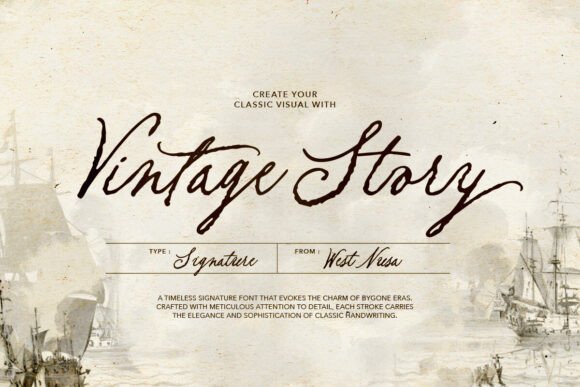
When we talk about the visual characteristics of Vintage Story, we are looking at more than just "old-fashioned" curves. The font is designed with an intentional irregularity that mimics the natural pressure variations of a quill or a brush pen. You will notice the subtle texture within the strokes, giving it a rustic charm that feels tangible. Unlike a standard sans serif font that prioritizes grid-like precision, this typeface embraces the organic flow of handwriting. It features a baseline that dances slightly, which prevents the text from looking static or robotic.
The true value of a premium font like this lies in its technical sophistication masked by its casual appearance. Vintage Story includes a robust set of ligatures and stylistic alternates. For a designer, this is crucial. It prevents the repetitive look that plagues many digital scripts. When you type "love" or "beauty," the letters connect in a way that feels natural rather than forced. This attention to detail ensures that the script font maintains high legibility while preserving the illusion of hand-lettered art. It strikes a delicate balance: it looks personal enough to be a love letter, but clean enough to function as a display font for a logo.
Strategic Applications: Where to Deploy This Typeface
Knowing where to use a creative font is just as important as choosing it. Because Vintage Story commands attention with its intricate details, it functions best in specific contexts. It is an ideal choice for projects where emotion and personality are the primary drivers of the message.
Consider the realm of brand identity. For small business owners in the artisanal sector—coffee roasters, boutique bakeries, or handmade cosmetics—this font can be the cornerstone of your visual identity. Using it in your logo design immediately communicates craftsmanship and tradition. It tells your customers that you value the process, not just the result. However, it is best used as an accent. Pairing it with a clean, geometric sans serif font for body text creates a perfect visual hierarchy, allowing the headers to shine without overwhelming the reader.
Beyond branding, the font excels in editorial design and packaging design. Imagine a magazine feature on rustic living or a wine label that needs to convey heritage. Vintage Story adds that necessary layer of sophistication. In the digital space, it works beautifully for short-form content like social media graphics or hero images on a website. However, a word of caution for web design: because it is a detailed script, ensure it is used for headlines or pull quotes rather than paragraph text to maintain fast load times and readability across devices.
Elevating Perception and Audience Connection
Typography is a psychological tool. The typeface you choose signals to your audience how they should feel about your content. By utilizing Vintage Story, you are tapping into the psychology of nostalgia and trust. In a market saturated with sleek, futuristic minimalism, the "handmade" look stands out. It humanizes a brand. When a potential customer sees a handwritten style on a package or a website, it triggers a subconscious association with personal attention and care.
This font helps build a consistent narrative. If you are a blogger or a content creator, using this typeface consistently in your headers helps build recognition. Your audience begins to associate that specific visual style with your voice. It transforms a standard blog post into a piece of editorial design. It also supports multiple languages, which is a practical necessity for global brands looking to maintain their aesthetic across different markets without switching typefaces.
Practical Guide to Implementation and Pairing
Adopting a new typeface requires a bit of testing to ensure it fits your workflow. Here is some practical guidance for integrating Vintage Story into your toolkit:
- Evaluate the Context: Before applying the font, look at the complexity of your layout. If your design is already busy with textures and images, a highly decorative script font might create visual noise. In that case, use it sparingly for a signature or a small logo mark.
- Master the Pairings: As a general rule in modern typography, contrast is king. Do not pair Vintage Story with another serif font or a script; it will look chaotic. Instead, pair it with a sturdy, neutral sans-serif like Open Sans, Lato, or a classic grotesque. This allows the handwritten elements to pop against the clean background of the body text.
- Check the Alternates: When you install the font, open your design software (like Adobe Illustrator or Photoshop) and explore the Glyphs panel. You will likely find alternative versions of letters like 's', 'b', or 'h'. Swapping these out for specific words can eliminate awkward connections and make your typography look custom-lettered.
- Licensing and Usage: If you plan to use this for commercial font applications—such as selling merchandise, printed books, or client logos—ensure you have the correct license. Most premium fonts distinguish between personal use and commercial use. Respecting the license protects you legally and supports the type designers who create these design assets.
- Readability Checks: Always print out a sample or view it on a mobile device. Sometimes a font that looks elegant on a high-resolution monitor becomes illegible on a small phone screen. Adjust your letter-spacing (tracking) slightly if the letters feel too cramped.
Ultimately, Vintage Story